Winterizing your plumbing in Ontario: preventing frozen and burst pipes
By Petra Vogel · Updated 2026-08-11
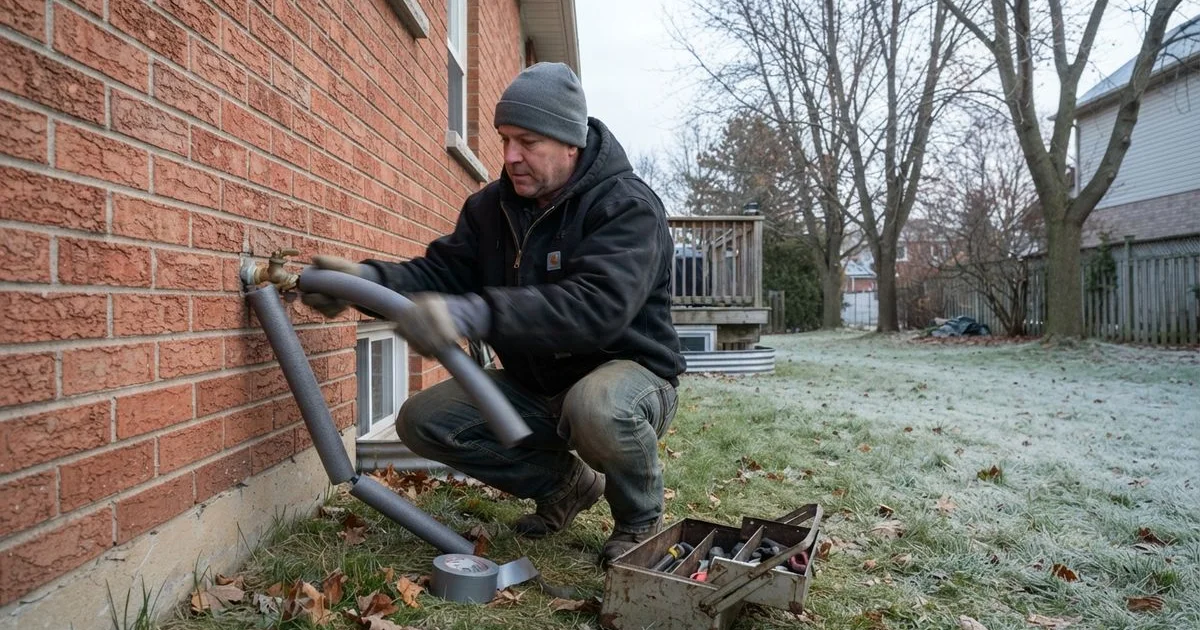
Ontario winters put real stress on plumbing that isn’t built for it or hasn’t been prepared, and a burst pipe from a hard freeze is one of the more expensive, disruptive things that can happen to a home. Most of the prevention here takes an afternoon and costs very little compared to the cleanup from a pipe that actually bursts.
Where pipes are most at risk
Exterior walls, unheated garages, crawl spaces, and any pipe running through an uninsulated area are the usual trouble spots, since they’re exposed to cold air that interior plumbing never sees. Outdoor hose bibs and the pipe just behind them are a classic weak point too, particularly if the hose is still connected over winter, which traps water in the line and increases freeze risk.
| Area | Risk level | What to do |
|---|---|---|
| Outdoor hose bibs | High | Disconnect hoses, drain, and insulate or use a frost-free bib |
| Unheated garage pipes | High | Insulate exposed pipe, keep garage door closed in cold snaps |
| Crawl space plumbing | Moderate to high | Insulate pipes, seal drafts near the crawl space |
| Exterior wall pipes (kitchen, bathroom) | Moderate | Open cabinet doors during extreme cold to let heat reach the pipe |
| Interior, well-heated areas | Low | Standard precautions usually sufficient |
Before the cold sets in
Disconnect and drain garden hoses, and shut off any dedicated outdoor tap valve if your home has one. Insulate any exposed pipe you can access, in a garage, crawl space, or basement rim joist area, with pipe sleeves or heat tape, both inexpensive and available at most hardware stores. If your home has an irrigation system, it needs a proper shutdown and blowout, which many homeowners hire a specialist for the first time just to see the process done correctly.
During a hard freeze
Keep your home heated to at least the minimum needed to protect pipes, even in rooms you don’t use often, and open cabinet doors under sinks on exterior walls to let warm air reach the pipes directly. For a specific pipe you know is vulnerable, a slow, steady drip from the tap keeps water moving, which makes freezing less likely. This isn’t necessary for every tap in the house, just ones in genuinely exposed locations.
If you’re heading away for a while
Don’t turn the heat off entirely, even for an unoccupied home; keep it at a minimum of roughly 13 to 15 degrees Celsius. Know where your main shut-off valve is in case a neighbour or property watcher needs it in an emergency, and consider asking someone to check on the house periodically during an extended cold-weather absence, since a small leak can become a major problem fast when nobody’s there to notice it.
A quick fall checklist
Doing this in one pass, ideally before the first hard frost rather than during it, keeps the list manageable: disconnect and drain all garden hoses, shut off and drain dedicated outdoor tap valves, insulate exposed pipe in the garage, basement rim joist, and crawl space, confirm your furnace and heating system are working properly well before you actually need them, and locate your main shut-off valve if you haven’t already. None of these take long individually, but doing them together in one weekend beats discovering a gap during the first cold snap of the season.
If a pipe does freeze or burst
A frozen pipe with no burst yet can sometimes be thawed carefully with a hair dryer, heat tape, or warm towels, working from the tap end toward the blockage, with the tap open to relieve pressure as it clears. Never use an open flame. If a pipe has already burst, shut off the main water valve immediately and call a plumber; that situation moves from prevention into emergency territory fast.
Plumbers listed on this directory are ranked partly on how quickly reviewers report a response during exactly this kind of situation, worth knowing before you actually need one. How that scoring works is on the methodology page, and the full directory covers licensed plumbers across every category for whatever winter throws at your home.
Questions people ask
- What temperature causes pipes to freeze?
- Pipes are generally at risk once temperatures drop below about minus 6 to minus 7 Celsius for a sustained period, especially in uninsulated or exterior-facing areas like garages, crawl spaces, and exterior walls.
- Should I leave a tap dripping during a cold snap?
- For pipes known to be at risk, a slow, steady drip keeps water moving and reduces the chance of a freeze, since moving water is harder to freeze than standing water. It's a reasonable precaution for a specific vulnerable pipe, not something every tap in the house needs.
- How do I know if a pipe has already frozen?
- Little to no water coming from a specific tap while others work normally is the main sign. Don't use an open flame to thaw it. A hair dryer, heat tape, or warm towels on the pipe, along with opening the tap to relieve pressure, are safer approaches.
- What should I do before leaving for a winter vacation?
- Keep the heat on at a minimum of about 13 to 15 Celsius, know where your main shut-off is, and consider asking a neighbour to check the house periodically if you'll be away for an extended period.