Backflow prevention testing rules in Ontario: what property owners need to know
By Petra Vogel · Updated 2026-07-20
This is general information about backflow testing requirements in Ontario, not legal advice. Requirements vary by municipality, so confirm the specifics that apply to your property with your local water authority or a certified tester.
Why this exists
A backflow preventer stops contaminated water from flowing backward into the drinking water supply, which is why backflow prevention testing matters most on properties where non-drinking water sources connect to the plumbing system: irrigation lines, fire suppression systems, boilers, and some commercial equipment. Because a failure affects more than just one property, testing this device isn’t left to homeowner discretion the way most plumbing maintenance is. Backflow testing is one of several Ontario plumbing rules built around permits and public safety; gas fitting licensing is governed by a similarly strict set of requirements. Municipalities that require it treat it as a shared public health matter, similar in spirit to other utility-adjacent inspections.
Who typically needs to test
| Property type | Backflow testing commonly required? |
|---|---|
| Standard single-family home, no irrigation | Usually not |
| Home with an irrigation system | Often yes |
| Home with a fire suppression system | Often yes |
| Multi-unit residential building | Often yes |
| Commercial property | Almost always |
If you’re not sure whether your property falls into a required category, your municipality’s water department can confirm, and it’s worth checking rather than assuming a residential property is automatically exempt. This is especially worth confirming after adding an irrigation system or sprinkler line to an existing home, since that kind of addition is a common trigger for a new testing requirement that wasn’t there before.
What the testing process looks like
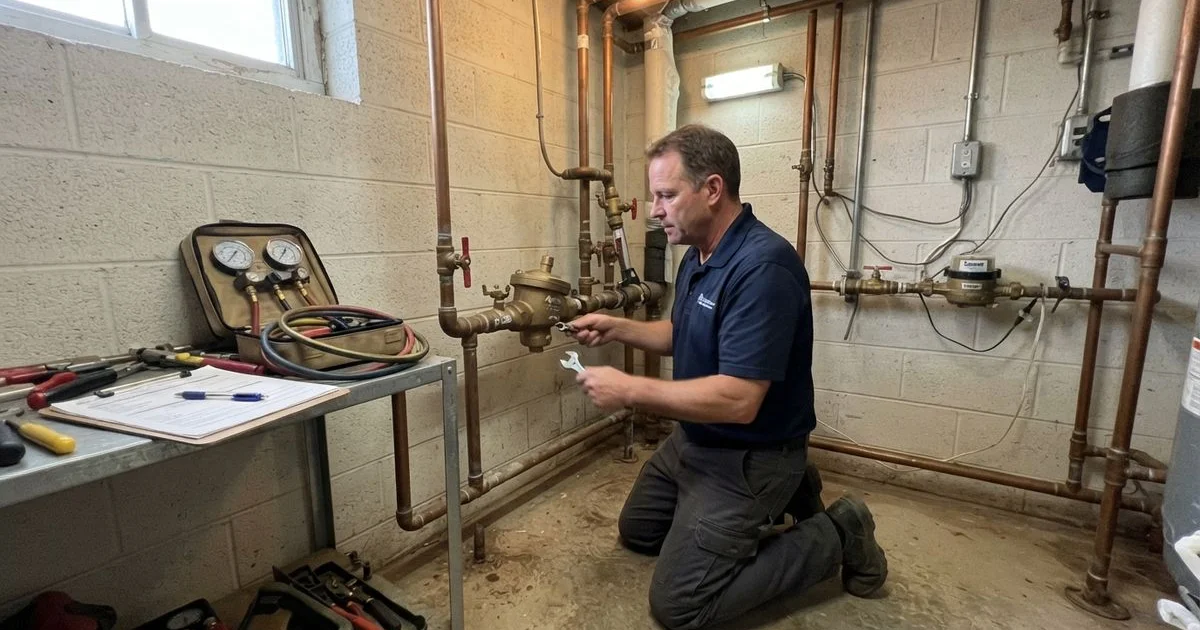
A certified backflow tester checks the device to confirm it’s preventing reverse flow correctly, which typically takes well under an hour for a single device. The tester files a compliance report with the municipality, which is how the requirement is tracked and enforced. Multi-device commercial properties take longer and cost more, roughly proportional to the number of devices being tested. Property owners are usually responsible for scheduling this themselves each year rather than waiting for a reminder, though some municipalities do send notices.
Missing a deadline is more than a formality
Skipping a required test isn’t just a paperwork lapse. Depending on the municipality, consequences can range from a fine to a water service restriction until the property comes back into compliance, since an untested device is treated as an unverified risk to the shared water supply. For a rental or commercial property, this can also create liability exposure if a backflow event were ever to happen on an untested, non-compliant device.
Property managers overseeing several buildings, or landlords with more than one rental, sometimes lose track of which addresses have devices and which testing dates are coming due, especially when properties were acquired at different times with different histories. A simple spreadsheet noting device location, last test date, and next due date per property avoids the scramble that comes with finding out a deadline was missed only after a notice arrives.
What it typically costs
Annual testing fees for a single residential device are generally modest, often close to what a plumber charges for a short service call, since the test itself is quick once the tester is on site. Commercial properties with multiple devices pay more overall, roughly scaling with the number of devices, though there’s often some efficiency in testing several at once during a single visit. If a device fails testing, repair or replacement is a separate cost on top of the testing fee itself, so budgeting a little buffer for that possibility is reasonable, especially for an older device that hasn’t been serviced in several years.
Keeping on top of it
Set a yearly reminder tied to your last test date rather than trying to remember it from scratch each spring. If you’ve bought a property recently, confirm whether it has a backflow device at all and, if so, whether its testing is current, since this is easy to miss during a purchase. A certified backflow tester can also advise on how many devices your property actually has, which isn’t always obvious from the outside.
How backflow prevention listings on this directory are ranked, including responsiveness and documentation quality reported by past customers, is explained on the methodology page, and the full directory covers every plumbing category across Ontario.
Questions people ask
- Does every home need backflow testing?
- Not every single-family home does. It's most commonly required for properties with an irrigation system, a fire suppression system, certain commercial or multi-unit buildings, or any connection that could let non-drinking water flow back into the supply.
- Who enforces backflow testing requirements?
- Typically the local municipality, since it's tied to protecting the shared drinking water supply. Requirements and enforcement can differ from one Ontario municipality to another.
- How often does testing need to happen?
- Annually is the most common requirement where testing applies, though this can vary by municipality and by device type. Check with your local water authority for the specific schedule that applies to your property.
- What happens if I miss a testing deadline?
- Consequences vary by municipality but can include fines or, in some cases, water service restrictions until the device is tested and a compliant report is filed.